Audit View: Customizable Visibility for Onchain Finance
Send a supplier a bank payment receipt, and they learn that an invoice was paid. Send a link to a payment on a transparent blockchain, and they also get an address they can investigate: other transfers, token balances, and counterparties. A routine payment can reveal business relationships and cash movements to anyone who looks.
When those transaction details are private, the business still has to resolve missing payments, reconcile settlements, and respond to audits. Its teams need access to records they can no longer look up on a public block explorer. Encryption alone does not determine how they get that access or where it ends.
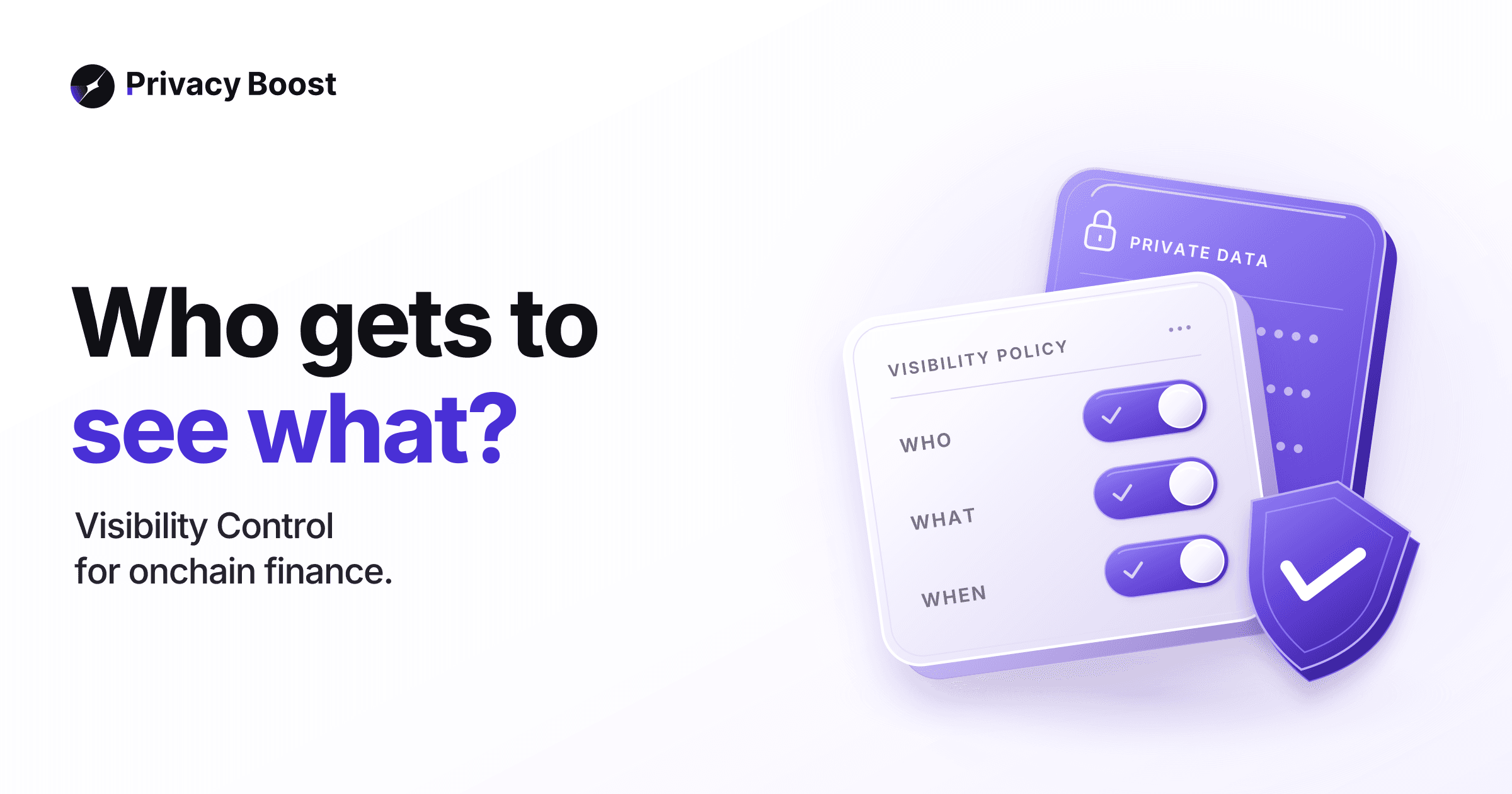
Privacy Boost's Audit View lets you customize access to financial data that stays private by default. We work with your team to define visibility policies for your service: who can retrieve which records, under what conditions, and for how long.
1. Running a business on private transactions
Consider a fintech offering private stablecoin payments. A merchant asks why its weekly settlement is lower than expected. The operations team needs to trace the payments and refunds behind that settlement, even though the details are hidden from the public.
For this app, we can configure an operations view covering its payments, refunds, and settlements. A separate visibility policy can give a support agent access to the transactions relevant to a customer case.
The policies also define where the app's visibility stops. Access to a customer's payments inside the app does not need to expose their unrelated holdings or transactions.
2. Giving an audit the right scope
Later, the business hires an accounting firm to review a quarter's activity. It wants to grant access on these terms:
Let this audit team review USDC payments and settlements for these business accounts, covering July through September. Keep access open for two weeks.
One visibility policy can combine the selected accounts, token, transaction types, and dates. The two time limits serve different purposes: the auditors get three months of records, with two weeks to retrieve them. For the review to be meaningful, the audit view needs to include all records within the agreed scope.
The institution's internal compliance team may need continuing access to the stablecoin activity it oversees. A regulator's request could instead concern a set of wallets, one token, and a particular reporting period.
Each can have its own visibility policy. Granting the external audit team access, or ending it, does not have to change the internal team's permissions.
3. Ending access when the work ends
Two weeks later, the review is complete and the business needs to end the accounting firm's access. Whether that is straightforward depends on how the records were shared.
One option is to share a viewing key. RAILGUN, for example, lets the recipient use that key in a view-only wallet to read balances and transaction history without the ability to spend funds.
The key must be delivered securely and protected by whoever holds it. RAILGUN's documentation describes viewing keys as irrevocable. In a direct key-sharing arrangement, ending the engagement does not invalidate the auditor's copy.
Privacy Boost gives auditors access through the service under a visibility policy, with access recorded for review. When the engagement ends, revoking their permission stops further requests. A new audit team gets its own permissions without receiving the keys that decrypt the financial data.
Revocation cannot erase information already received, just as removing access to a finance system does not recall a downloaded statement.
4. Letting customers choose what to share
Customers can initiate disclosure too. The app can let customers choose a private payment and share its recipient, amount, and date with a supplier. A visibility policy limits the supplier's view to those details. The customer gets a useful receipt while keeping their balance and other transactions private.
In everyday finance, we expect confidential records to remain available for the work that requires them. Onchain finance needs to meet that standard. Audit View lets you build those workflows around your service's private data and adapt access as your business changes.
If you're building an onchain financial service, bring us your visibility requirements. We can help you turn them into policies that fit your product and operations.
See Privacy Boost in action
Explore the privacy infrastructure behind confidential onchain finance.
Read next

[How Privacy Boost Works #5]: Private Payments From Your Safe Multisig
Privacy Boost V2 lets teams spend private assets from the Safe they already use. Owners sign an ordinary Safe transaction that approves each exact spend through AuthRegistry, so the threshold and review process stay the same while recipients and amounts stay out of public view.
Introducing Privacy Boost SDK for Morpho Integrators
The Privacy Boost SDK lets fintechs, neobanks, and wallets integrating Morpho give their users private deposits. Users keep earning on Morpho while their balances stay shielded from public view, through a drop-in, self-custodial integration.