



Stablecoin payments that keep merchant sales private
Customers pay from a private balance in your app, or straight from an exchange.

 Base
Merchant sales
Competitors can’t read a merchant’s sales or balance from the chain.
Customer spending
Paying one merchant doesn’t expose the rest of a customer’s payment history.
Payment volume
2,000+ TPS at the gas limit, and 300+ sustained at Base’s gas target, with proofs in under 500ms.
Payments and refunds
Customer payments
Customers pay from a private balance in your app, straight into the merchant’s private balance.
Paying from an exchange
Customers without a private balance send from any exchange to the merchant’s Portal address. The transfer is public; the account it credits isn’t.
Refunds
A payment link refunds any wallet, even one that hasn’t joined. If no one claims it by the deadline, the funds come back.



How payment networks use Privacy Boost
Accounts
The SDK runs in your customer and merchant apps on web, iOS, and Android. Each customer and merchant gets a private account at first sign-in, on the login you already use: Privy, Dynamic, your own JWT, or a wallet.
Settlement
Payments settle onchain in batches, with one proof per batch. A block explorer shows that a batch settled and how many payments it held, but not who paid whom or how much.
Deposits and withdrawals
Money entering or leaving the pool is an ordinary token transfer, so its address and amount are public. A merchant’s withdrawal doesn’t show which account it came from.
Oversight
Your operations team sees every payment on your service and reconciles from that record. An auditor registered onchain can query one account per signed request, and every query is logged onchain.
Customers
 TossRead the announcement
Privacy for Toss’s onchain payment pilots
Toss’s proof of concept ran local currency vouchers onchain through top-up, merchant payment, and settlement, with Privacy Boost keeping payment details out of public view.
 Startale
 SoneiumRead the announcement
Privacy for the Startale App and Startale OFK
Privacy Boost is Startale Group’s official privacy partner and powers the Privacy Infrastructure Kit in its Onchain Finance Kits.
Frequently asked questions
Who holds the merchants’ funds?
Each merchant. Only the owner of a private balance can spend it, and forced withdrawal lets them exit without our relay.
What does it cost?
Shielding has no protocol fee; you pay network gas. Private transfers and withdrawals each carry a fee, and a batch send pays one fee for all its recipients. Swaps and Earn carry a gateway fee. Ask us for current rates.
How long does an integration take?
With our team, a production-grade proof of concept typically takes about two weeks, covering private transfers, balance and history queries, and auditor access.
Related reading
Partnerships
Friends is live on Startale App: private payments powered by Privacy Boost
Friends is a Mini App on Startale App that lets you send money onchain without putting your payment history on display. It's powered by Privacy Boost, bringing shielded transfers to every user on Soneium.
How it works
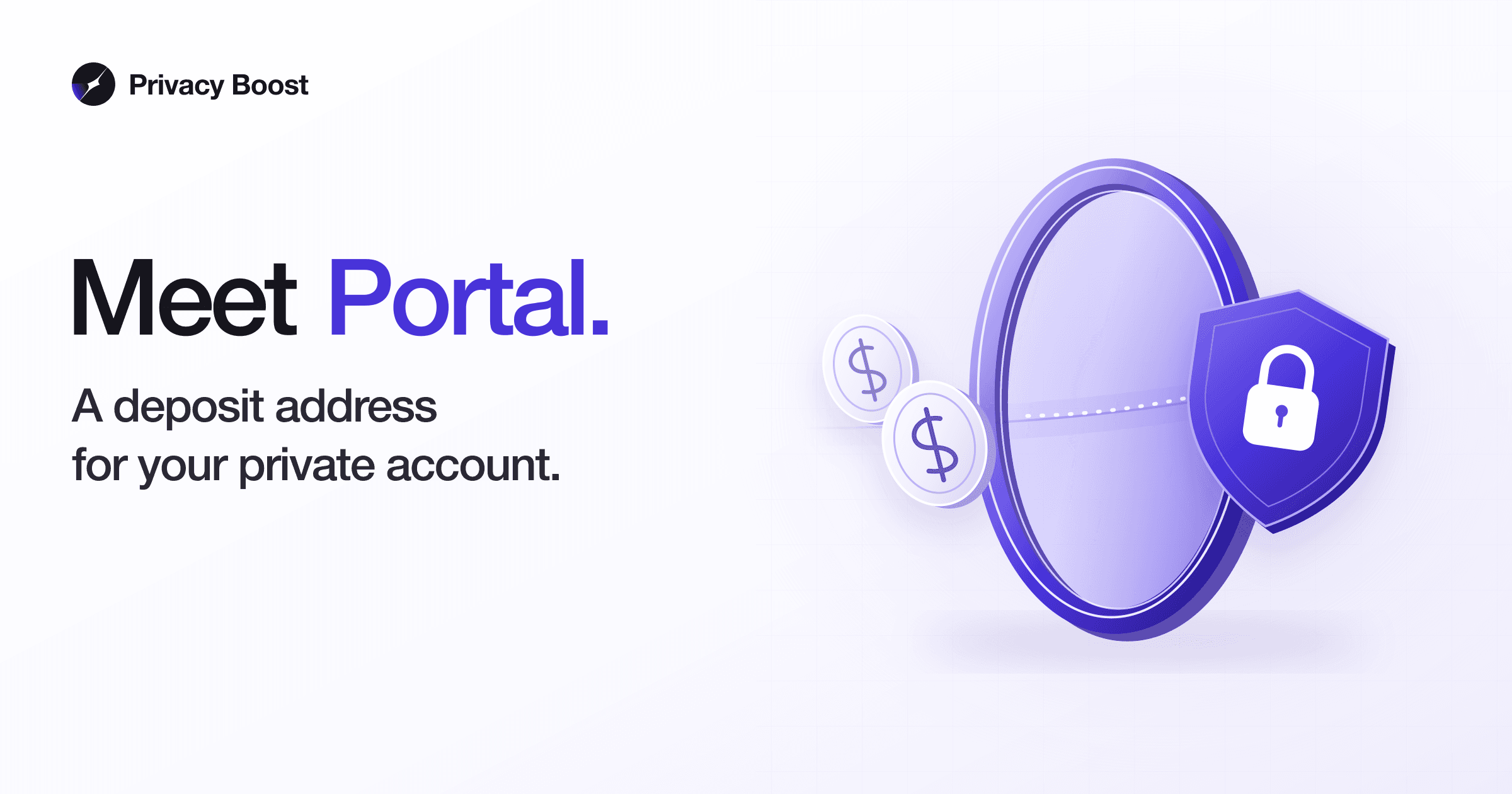
How Privacy Boost works #4: A Portal address for your private account
Privacy Boost V2's Portal is a reusable public deposit address linked to a private account. Send it ordinary tokens from an exchange, a wallet, or a payer, and the assets land in your private balance without public onchain records revealing which account received them.
How it works
How Privacy Boost works #1: How ZK proofs and TEEs split the work
Most onchain privacy projects pick a side: trustless-but-slow ZK, or fast-but-fragile trusted hardware. Privacy Boost splits the guarantees by how badly their failure hurts, so a hardware break can never reach your funds.