



Private holdings and transfers for tokenized funds
For issuers whose holders can’t have their positions on a public ledger.
 Logged onchain
Holdings
Once units are in the private balance, who holds them and how many isn’t public.
Secondary transfers
A transfer between holders shows neither the holders nor its size.
How a transfer settles
Approval
The seller’s Safe signers approve at their usual threshold. Safe{Wallet} shows the approval, but not the fund, units, or buyer.
Register
Your fund operations see both holders’ new positions once the transfer settles.
Onchain record
One pool transaction, with no holder, fund, or unit count.

 Aster Family Office
How fund issuers use Privacy Boost
Your token
Fund units issued as ERC-20 tokens can be held privately once the token is on the supported list. Ask us to add yours.
Custody
A holder’s Safe or wallet owns their account, and only the holder can move their units. Any owner of a holder’s Safe can sign in to see its balance and history.
Register and audits
Your fund operations see every holder’s position, so the register stays complete. An auditor registered onchain can query one holder’s balances or history per signed request, and every query is logged onchain.
What stays public
Entries into and exits from the pool are ordinary token transfers, so their addresses and amounts are public.
Customers
 Startale
 SoneiumRead the announcement
Privacy for the Startale App and Startale OFK
Privacy Boost is Startale Group’s official privacy partner and powers the Privacy Infrastructure Kit in its Onchain Finance Kits.
Frequently asked questions
Which Safes can own an account?
Safe version 1.3.0 or later. A Safe that needs several signatures works on OP Mainnet and Base.
How long does an integration take?
With our team, a production-grade proof of concept typically takes about two weeks, covering private transfers, balance and history queries, and auditor access.
Related reading
Partnerships
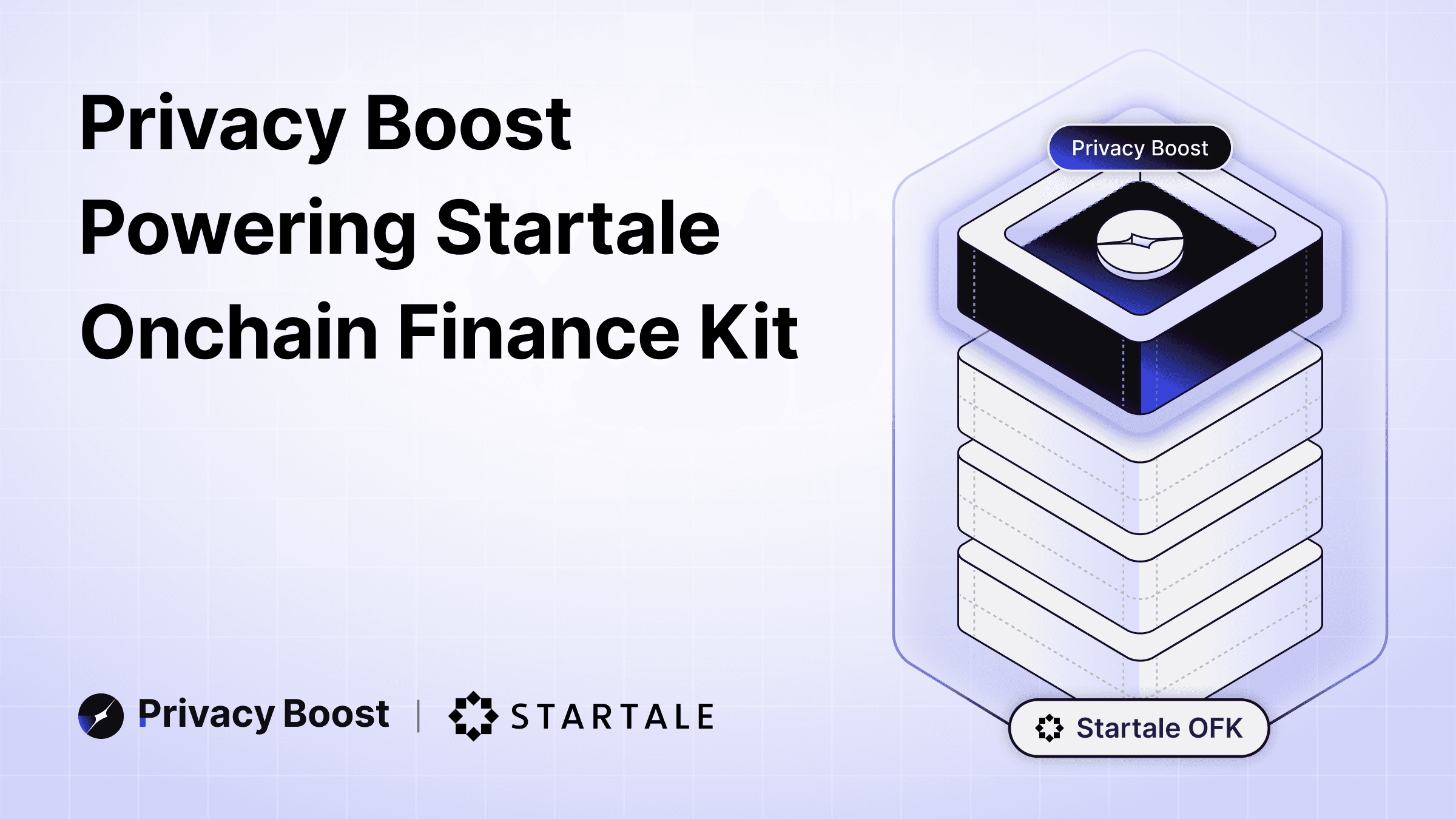
Privacy Boost powers the Privacy Infrastructure Kit in Startale OFK
Startale Group has announced Startale OFK (Onchain Finance Kits), a suite of proprietary onchain financial infrastructure kits for enterprises and financial institutions. Privacy Boost powers the Privacy Infrastructure Kit, one of the core pillars of OFK.
How it works
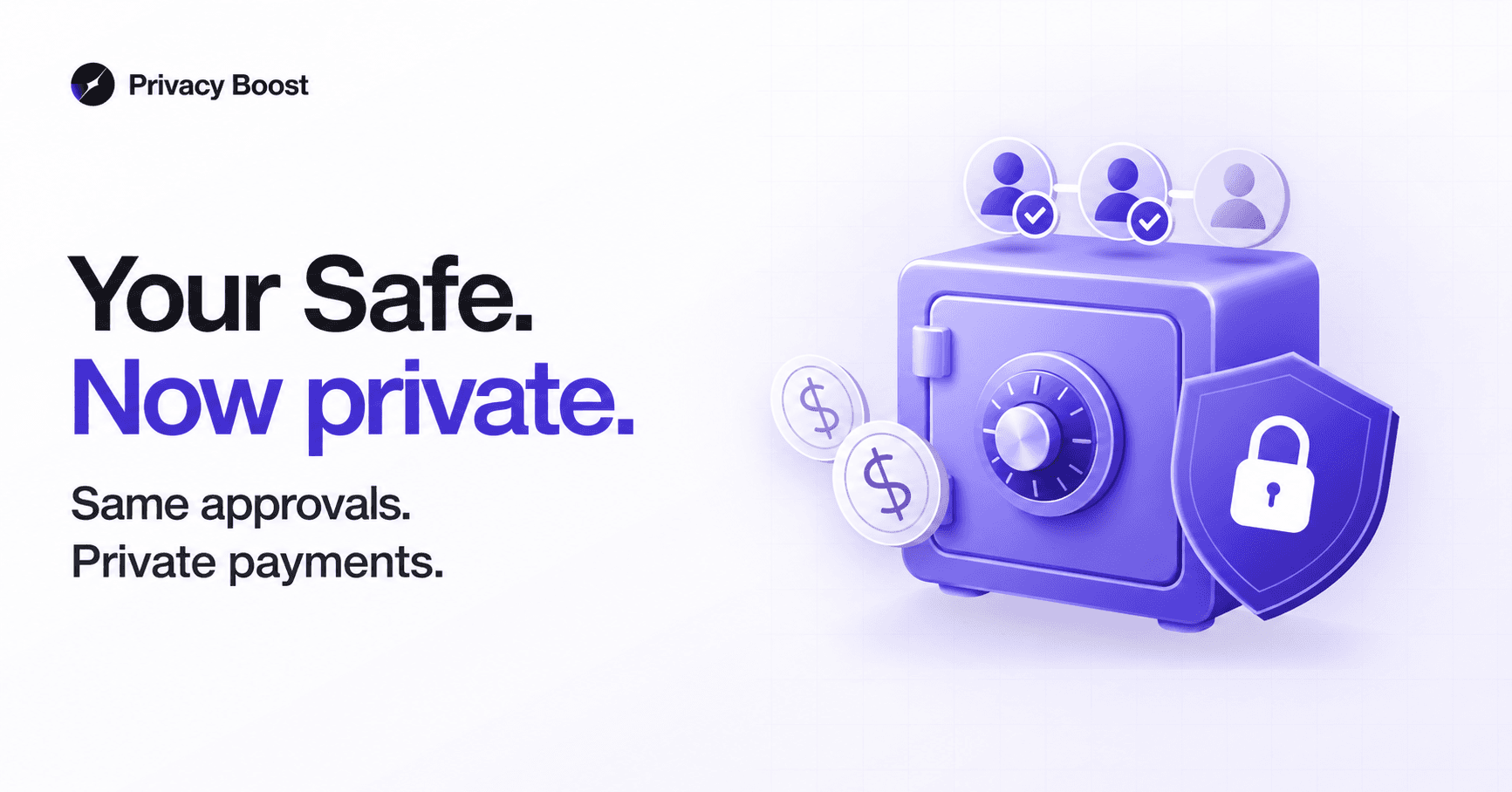
How Privacy Boost works #5: Private payments from your Safe multisig
Privacy Boost V2 lets teams spend private assets from the Safe they already use. Signers sign an ordinary Safe transaction that approves each exact spend through AuthRegistry, so the threshold and review process stay the same while recipients and amounts stay out of public view.
Product
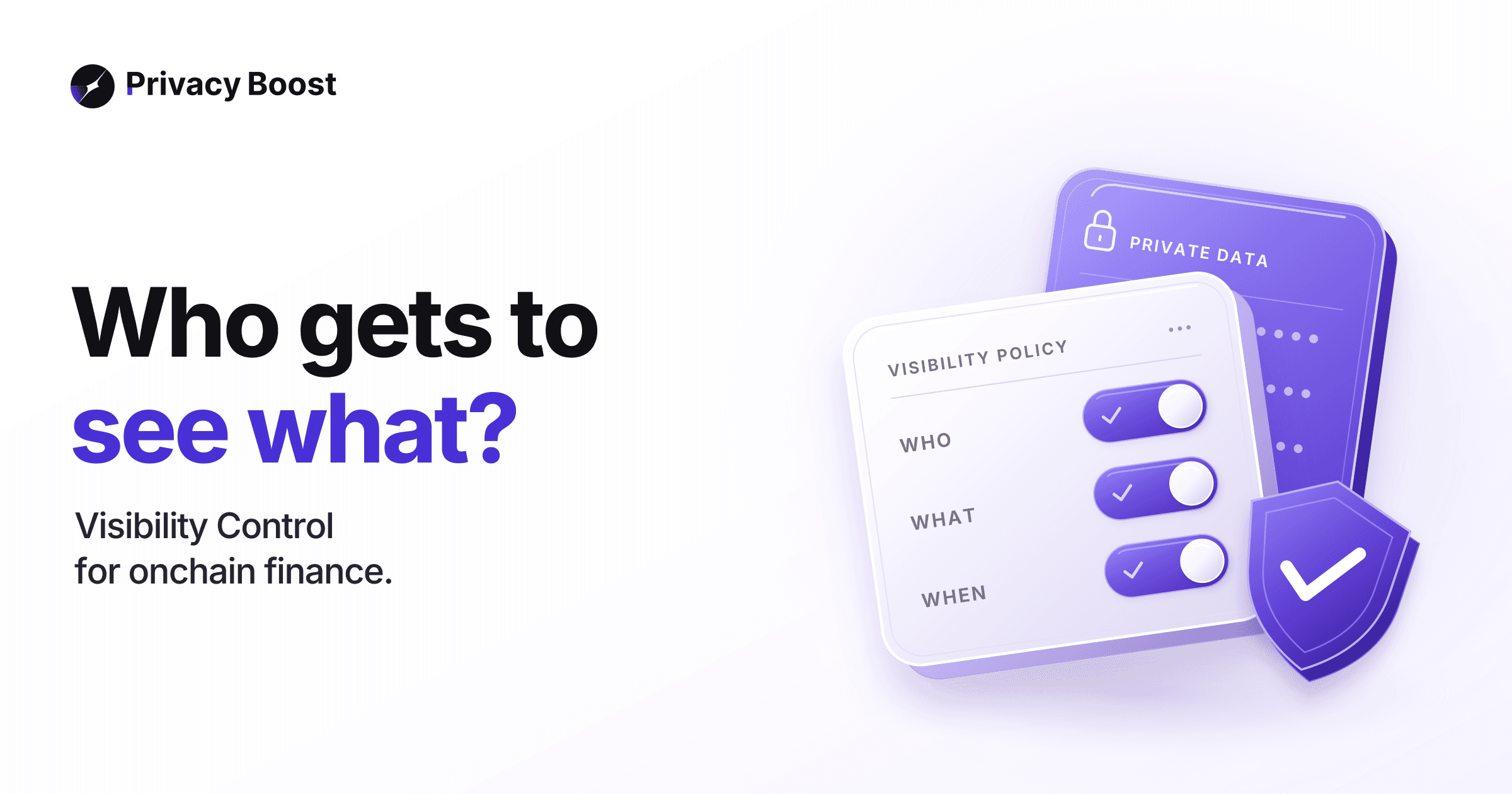
Audit View: choose who sees your private records
Private transactions still have to be reconciled, supported, and audited. Audit View lets you define visibility policies for who can retrieve which records, under what conditions, and for how long, while financial data stays private by default.